
Technology
Pilot infrastructure for practical process development
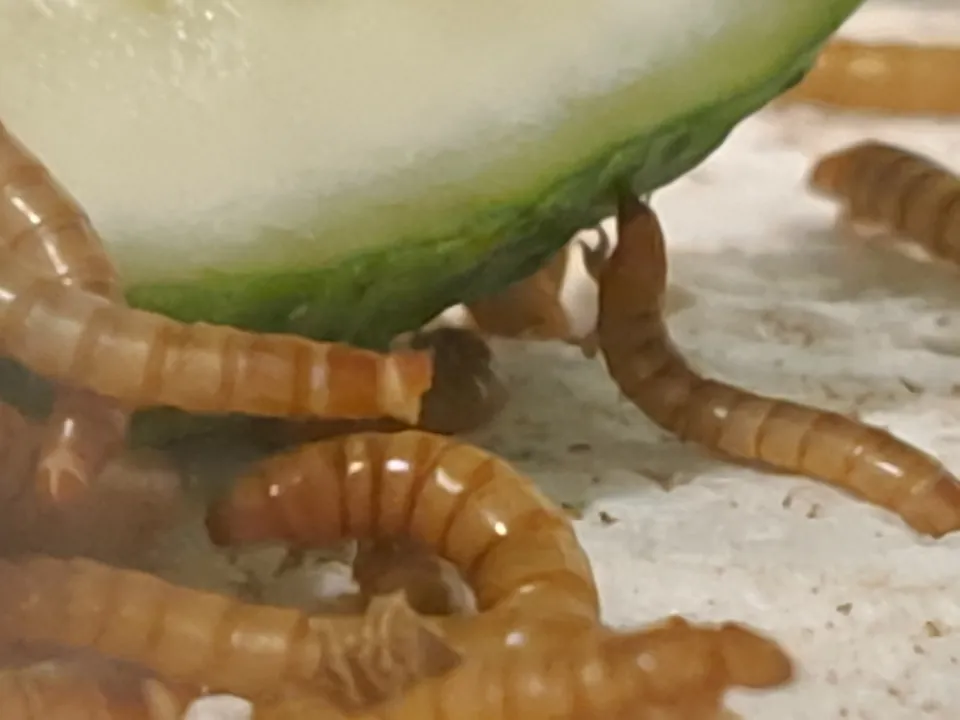
Tenebrio molitor rearing requires coordination of the biological cycle, environmental conditions and daily operating procedures. Our pilot system supports colony management, rearing observation, procedure development and practical demonstrations for prospective users.
Controlled conditions
Our infrastructure includes four climate-controlled chambers, sieving equipment and monitoring systems. It supports organised work with different developmental stages and rearing batches, alongside data collection for process improvement.
From colony to product
Our development work covers breeding-colony maintenance, reproduction, rearing and larvae separation, as well as the assessment and testing of further processing.
- 1
Breeding colonies
Maintaining adult beetles and organising colonies.
- 2
Reproduction
Monitoring developmental stages and starting new batches.
- 3
Larvae rearing
Work in controlled conditions with record keeping.
- 4
Separation
Sieving and separating larvae from substrate and frass.
- 5
Processing assessment
Assessing application pathways and required analyses.
Application pathways
Protein fractions, oil and frass represent different application pathways, each requiring suitable specifications, analysis and preparation for its intended use.
Protein fraction
Specification and analysis according to use.
Oil
Characterisation and preparation for a specific use.
Frass
Assessment of possible uses and required testing.
Transferring the process
Through TRISA, this knowledge was transferred to a partner in Ulcinj through pilot-space development, practical training and mentoring. The transfer addresses the whole operating process: facility organisation, colony handling, environmental monitoring and record keeping.